
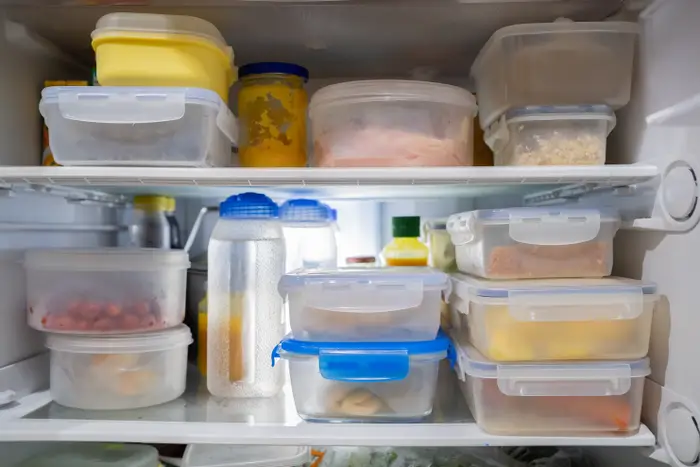
We all know the trusty plastic food storage container – it’s the unsung hero of big-batch cooking and leftovers. But recently, I found myself staring at an ancient container in my cupboard, wondering: How long can these things really last before they’re more danger than convenience?
Turns out, food scientists have some answers. When you dig into that stack of Tupperware (or whatever brand you’ve got), the first thing to check is the recycling code on the bottom. Look for numbers 2, 4, or 5. These plastics – HDPE, LDPE, and PP – are food-safe and durable, meaning you can reuse them without turning your meals into chemical experiments.
On the flip side, some plastics can leach harmful chemicals into your food. Yes, we’re talking to you, BPA – the dreaded endocrine disruptor that can mess with your hormones and health. So, if your container looks like it’s from the pre-BPA-free days (i.e. over 10 years old), it’s time to retire it, no matter how pristine it seems.
Also, as much as we love a good dishwashing session, don’t toss your plastic containers in there unless you want them to age faster than you can say “leftover stew.” High heat and harsh scrubbing do more harm than good. Stick to handwashing with hot soapy water, and your containers might last a little longer.
Finally, should you splurge on brand-name containers like Tupperware or Rubbermaid? While they used to be the gold standard, the quality gap is shrinking. Today, you can find reliable off-brand options too, as long as you double-check those recycling codes.
So, the takeaway? If your containers are cracked, stained, or older than a decade, it’s time to replace them. Keep your meals safe and your containers in check – and don’t let nostalgia make you a food safety risk!
Source Info: https://www.buzzfeed.com/taylortobin/are-old-plastic-food-containers-safe